
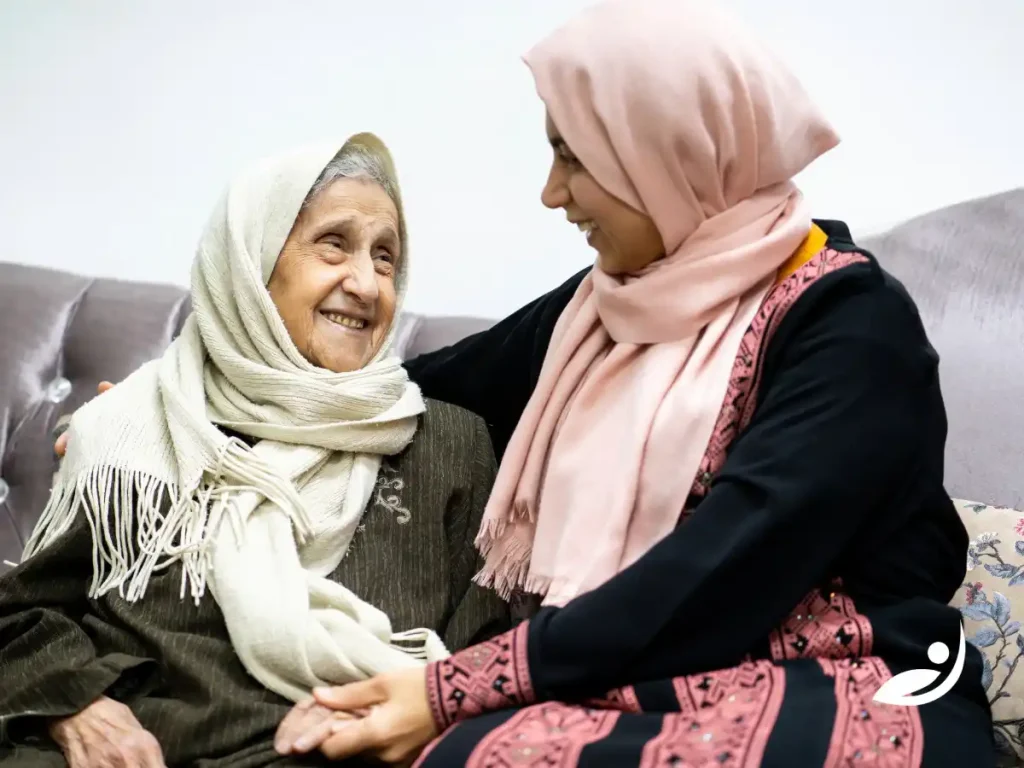
Muslim home care is about more than just practical help in the home. Like all home care, it emphasises dignity and respect but it also includes understanding the person’s faith and family values. Culturally aware care helps our clients to feel safe, comfortable, and understood – which leads to better outcomes for the care provided.
Why faith matters in home care
Many Muslim families place a strong value on caring for older relatives at home. Their faith can shape how they want someone to be supported – with privacy, modestly and inclusive of daily routines and food preferences. Good care should adapt to the individual, it doesn’t assume that every client has the same needs. Faith can be the most important aspect of the care required.
Family culture and shared care
In Muslim homes, care is shared across the family. There is an obligation to care for elderly relatives and older relatives are treated with deep respect. Muslim home care can supplement that family care and the best home care includes the family in making decisions about care. Requesting professional care is caring for an elderly relative. We can support the wider family by offering respite care, reassurance and consistent communication. This helps them to feel part of the care arrangements.
We know that introducing care teams to the family that speak the same language helps to ease communications and understanding between the carers and the family. It also reassures the person who is being cared for, reducing confusion and upheaval at a stressful time. Our carers are experienced in transitioning between family caregivers and professional care and during short term care e.g. respite care. We have carers who speak Bengali, Sylheti, Urdu, Punjabi, Pashto and Gujarati.
Daily habits and prayer
Prayer is an important part of daily life for Muslims with prayers five times each day (Salah). Muslim home care plans need to allow time, privacy and a clean space for prayer and washing before prayer (Wudu). Our carers understand that routines centre around prayer times, morning reflection, and evening worship. Arrangements also need to be made to attend Jumu’ah weekly and other important events at the mosque. We can arrange for accessible transportation to community events for our clients.
Today’s prayer times in London: https://www.islamic-relief.org.uk/resources/prayer-timetables/london/
Dietary requirements
Muslim clients avoid pork, alcohol and non-halal meat products. Muslim home care, then, must ensure that all ingredients are checked carefully, respect halal requirements and are prepared in the right way. In addition to personal preference, food and drink also needs to take into account festivals and religious observance. For example, during Ramadan and at Eid al Fitr.
Modesty and personal care
Modesty is important during personal care. Where possible women may prefer female carers and men may prefer male carers for intimate support. We can provide a carer of the preferred gender for home care. Personal care can include washing, grooming, dressing, toileting, and bathing. Carers know they need to preserve privacy e.g. by knocking before entering or keeping the person covered during care.
Cleanliness and the home environment
Cleanliness is a valued part of the home in many Muslim households. Muslim home care workers keep shared spaces tidy and respect household routines. Light housekeeping, like laundry, food preparation and clearance, or vacuuming can form part of a care plan. A clean, calm environment makes prayer and worship easier. On a practical level it can make mobility easier too, and prevent slips and trips in the home.
Jothno Care and Support are specialists in culturally sensitive care. As a South Asian family business we are aware of family dynamics and the routines, restrictions and traditions of faith. We match our carers to the person and family that they will be working with. We find that when the carer speaks the same language and is aware of cultural traditions, the care plan runs smoothly.
Muslim home care needs to provide:
- A tailored care plan that meets the needs of the individual.
- Recognition of daily routines such as prayer routines.
- Awareness of gender preferences for personal care.
- Privacy consideration and respect at all times.
- Knowledge of dietary preferences including halal requirements.
- Inclusion of the wider family who have responsibility for the elderly person.
Muslim home care should feel familiar, respectful and reassuring. Care plans are tailored to individual requirements with a willingness to adapt when necessary. Faith and family values are an integral part of the care plan – not an add-on. Cultural understanding, consistency, and compassion for the elderly person all form part of the service.
Our care co-ordinators will be able to discuss your faith requirements when you speak with them. They are experienced in arranging home care quickly and without delay when additional support in the family home is needed. The care co-ordinators will also be able to advise on funding care for your elderly relative. If your family is in need of Muslim home care, speak with our care team on 020 4548 9300 or fill in our form for a free care assessment.