
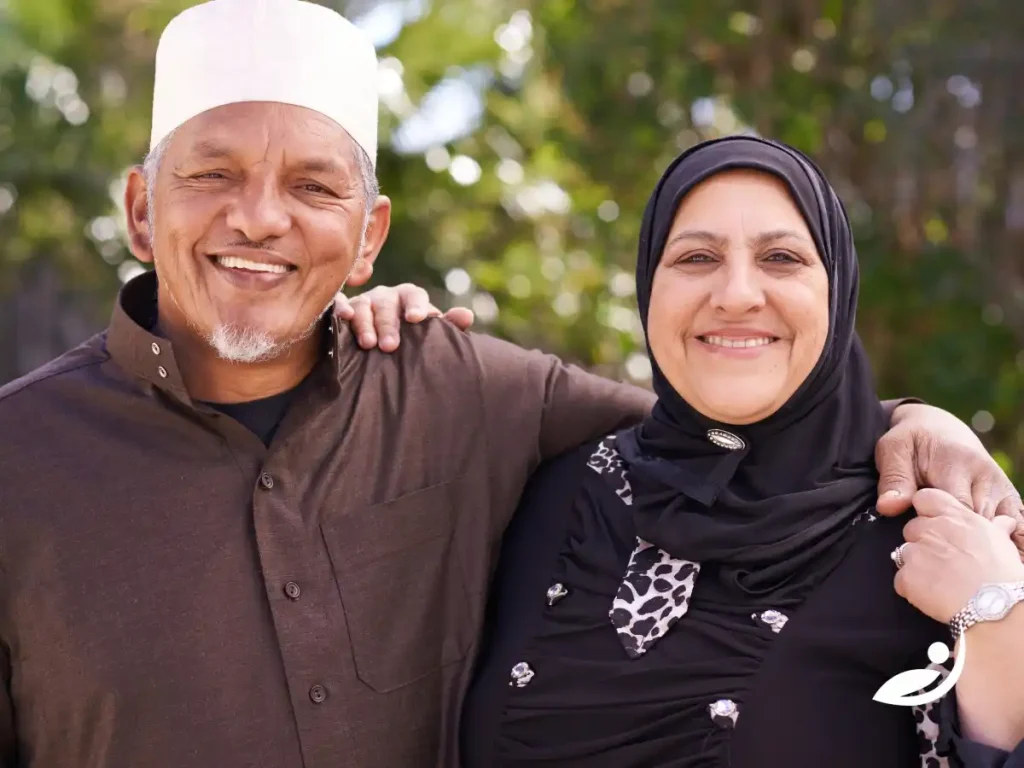
Bangladeshi families living in London want their parents to remain at home where it is comfortable. Where they have a familiar routine, language, faith and family surrounding them. But safety concerns can make that difficult. Live in care can help Bangladeshi parents stay at home safely, avoiding a move to a residential care home.
Bangladeshi children feel responsible for their parents as they get older, it is part of our culture. Bringing in professional carers can be a part of that care provision, when it is necessary. It supplements the family’s care for their elders.
Staying at home matters to our elders. They want to remain in the comfort and familiarity of their family home, where they have sometimes lived for years. They want to be respected and to continue with their faith, dietary preferences, and daily routines. They want to maintain the emotional wellbeing that comes from staying close to family, friends and the wider community. The people who speak their language. Most importantly, they want to keep their independence for as long as possible. They want to be treated with dignity and asked for their opinion about their future living arrangements.
Safety at home for the elderly
Safety at home for the elderly is not just about avoiding accidents, although that does play a part in our care plans. It also includes making sure that the person has good nutrition, medication management, companionship and peace of mind. We offer comprehensive care plans for support at home, that are tailored to the needs of the person, and can arrange for full time live in care.
There are some common safety risks in the home:
- Falls, slips and trips are more common on stairs, in the bathroom or when the house becomes cluttered
- Medication is more likely as we age, and collecting prescriptions, understanding the dosage and remembering to take medication gets more difficult
- Mobility limitations, particularly after illness or surgery, can lead to problems accessing the bathroom, kitchen or going upstairs safely
- Loneliness, anxiety and depression is increased in older people and those who live alone
- Reduced appetite can lead to dehydration or malnutrition
- Cooking and preparing food safely using kitchen appliances brings the risk of fire
Medical conditions, like dementia or Alzheimer’s, can increase the risks at home. Our carers are trained to be dementia-friendly and can offer support that helps those families who are coping with dementia or other complex needs.
While there are practical ways to improve safety in the home e.g. removing trip hazards, improving lighting, adding grab rails and non-slip mats, regular checkins or providing emergency call buttons – sometimes more help or supervision is needed. That’s where home care can fill the gap.
The role of live in care in caring for your Bangladeshi parents
A live-in carer can provide round-the-clock reassurance that your Bangladeshi parents are safe and secure at home. They will help with personal care, meal preparation, medication prompts, mobility support and companionship. It can provide an alternative to moving into a care home or residential facility, without uprooting parents from the home they love.
Care can adapt to changing needs. It can be low key to begin with – we provide respite care, visiting care or home care in London from a few hours a day – and this can be extended to include night care and waking care as your parent needs additional support. The care plan can be reviewed regularly to make sure it is still meeting the need.
At Jothno Care and Support we specialise in culturally sensitive care. As a South Asian family business, we are familiar with Bangladeshi culture, traditions and family expectations. We match carers to families and we will provide carers for your Bangladeshi parents who respect prayer routines, can prepare halal food, recognise modesty needs, and can speak the same language. We have carers who speak Bengali and Sylheti.
We find that matching carers to the family improves trust and co-operation between our agency, the extended family, and those they care for. We begin to feel like part of the family. Our care provision becomes an extension of your family’s care for their elderly relatives, supporting and supplementing family caregiving.
When family support is not enough
One sign that a parent may need more than occasional visits is when they are less stable on their feet than they used to be. This can make it difficult for them to move around the home or reach the toilet when they need it. It can lead to slips and falls.
Poor personal hygiene, grooming, dressing or missed medications is another common sign that a parent may have additional needs if they are to remain safely at home. Missed medications can raise concerns that they are confused or struggling with their mental health.
Sometimes the family is stretched beyond their capabilities and there is a family caregiver who is facing burnout. In modern London families, family members sometimes have to juggle careers, caregiving and running their own family home, especially when they have children of school age. Live in care can ease pressure on relatives while keeping parents safe at home.
Care for your Bangladeshi parents at home
Choosing the right care will provide your Bangladeshi parents with security and help them to remain in their own homes. It will take into consideration their need to remain in familiar surroundings and within their local community. It can provide the right balance between their need for independence and safety.
Live in care can provide round the clock support. It will be tailored to meet your parents’ current needs and it can be adapted to meet their future needs when necessary, providing continuation of care and reassurance.
We believe that early intervention is preferable to waiting until a crisis happens, so we encourage you to explore your options. Assess the risks with our care team who can offer a free care assessment.
Professional carers who are culturally sensitive, speak the same language, are familiar with faith and daily routines, and who can cater for dietary preferences can support your family in the care of your parents. Staying at home safely is a realistic goal, with the right support.