
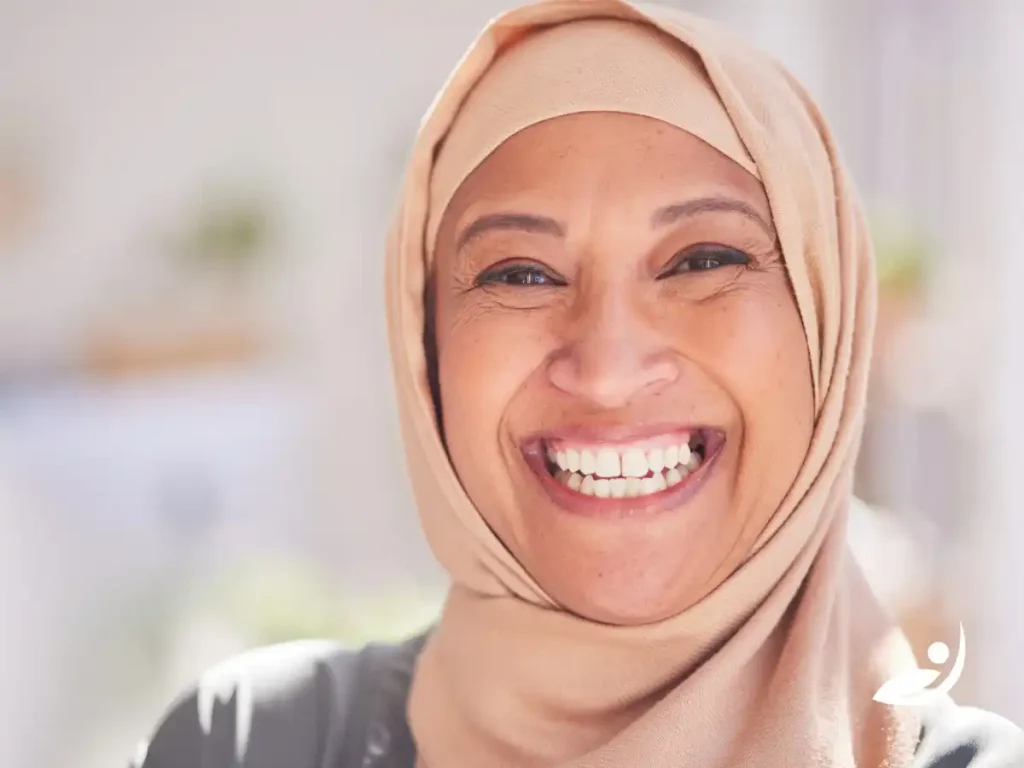
The choice between live in care vs a care home is an important one for a family to make. Caring for an older parent, grandparent or relative requires both emotional and practical consideration.
The best care option for a Muslim family depends on more than the elderly person’s health, it also needs to recognise privacy needs, prayer routines, halal food requirements and the level of family involvement.
Live in care might be better for those elders who want to stay at home with the family and remain part of the community. A care home, provided it can cater for specialist cultural care, may be better when there are specialist health needs.
What is live in care?
Live in care is when a carer lives in the person’s own home. This can help to preserve an established and familiar routine. Cultural practices like modesty, gender preferences, prayer preparations, dietary preferences and cultural traditions can be built into the care plan. It is attractive for Muslim families who want to keep religious habits, family visits and home comforts centralised. Essentially, much continues as it was in live in care, with the additional support.
What a care home means
Care homes are residential settings where the person lives with other residents and receives around the clock support. It can be preferable when a person needs more continuous supervision, medical attention, or specialist care. A care home is a more structured environment, where the needs of many are catered for. Religious and cultural fit in care homes is less common, but is possible.
What matters most to Muslim families?
When choosing between live in care vs a care home, there are many considerations. These are the ones that matter most to Muslim families:
Halal foods and preparation – as a South Asian family business we are aware of faith-based dietary preferences. Our carers are able to prepare halal foods in the right way.
Privacy and modesty – for personal care, privacy and modesty is a key consideration for Muslim families. We are able to cater for gender preference in carers.
Prayer support and space for salah – our carers can arrange for wudu before the five daily prayers and can assist with any mobility issues.
Family involvement – the Muslim families we work with know their role in caring for their family and extended family and we encourage them to be involved in the care plan and communication.
End-of-life considerations – our carers are trained to offer the person dignity at the end of their life, honouring the sanctity of life, and maintaining spiritual awareness through the declaration of faith and prayer.
Our Muslim elder care services focus on the importance of dignity, religious observance, halal food, prayer support, and family involvement.
Live in care vs a care home: pros and cons
Here are some benefits and disadvantages to compare live in care vs a care home.
Live in care benefits
- Live in care provides greater privacy for the family and comfort for the person who can stay at home safely.
- It is easier to maintain prayer routines, family customs and cultural traditions like the preparation of halal foods.
- It is often better for Muslim families who have specific requirements for the care of their loved ones.
- Carers are trained to deal with complex health conditions like dementia or physical disabilities.
Live in care disadvantages
- The family home may need adaptations for the safety of the person being cared for.
- Specialist medical care may be needed for medical conditions.
Care home benefits
- It is more suitable for someone who needs qualified medical care.
- Social interaction with other residents and structured routines can reduce isolation.
Care home disadvantages
- It can be harder to find a home that consistently understands Islamic needs.
- The person has to leave the family home to move into a residential care home.
Which option is better?
Live in care may be better if the priority is dignity, familiarity, modesty, prayer routine, dietary requirements, personalised plans, or keeping family life intact.
A care home may be better if the person needs specialist nursing or medical care and a more structured environment.
Which option is better depends on the person’s health needs and the family’s preferences.
Questions to ask before choosing care:
- Will meals always be halal?
- Can the person pray comfortably and on time?
- Are carers aware of modesty requirements?
- Can gender preference be specified?
- How are washing, dressing, and personal care handled?
- Can family visit frequently?
- Do you support dementia, mobility issues or end-of-life care?
- Are you experienced with Muslim clients?
- Will the family be involved in decisions about care?
Jothno Care and Support is able to assist in all these ways. Our carers are respectful and culturally aware. They are fully trained and dementia aware. We match our carers to the family they care for, so that they speak the same language and are aware of traditions and culture.
As an agency, we provide short term respite care, in home care and live in care for Muslim families in London. We can offer personal care, companionship and 24/7 support so that your parents, grandparents or relatives can continue to live at home safely.
Our live in care team at our Manor Park head office are experienced at arranging care quickly and professionally. We offer a free care assessment during which you can talk about your family’s care needs, call us on 020 4548 9300 or fill in the request form.
Live in care vs a care home: which is better for Muslim families?
There is no one-size-fits-all answer to whether live in care vs a care home is better for Muslim families. Every care plan that we prepare is different, so we know that families have different needs and requests.
Live in care often suits families that want to keep continuity, allowing their elders to live at home in a familiar environment and stay part of the community. A care home is sometimes a better solution when there are specialist medical needs.
Discussing care with your family will help to clarify whether, in your situation, live in care or a care home is best. Our initial calls are free and our care team will be able to advise on all the different considerations for caring for family from a Muslim perspective.