
A family caregivers guide to choosing the right option
Every day families have to make a choice between live in care versus a nursing home. They want to do the right thing for their relative or partner and be sure they will be happy and safe and looked after. There is so much choice that making this decision can be difficult to do, especially at a time of heightened emotion such as after a diagnosis or when it becomes apparent that the family caregiver can no longer cope with providing care. This guide can help to make that choice.
Understanding live in care
Live in care is provided 24/7, 365 days a year. The carer or carers live in the property with the user, so that they are on hand at all times of the day and night.
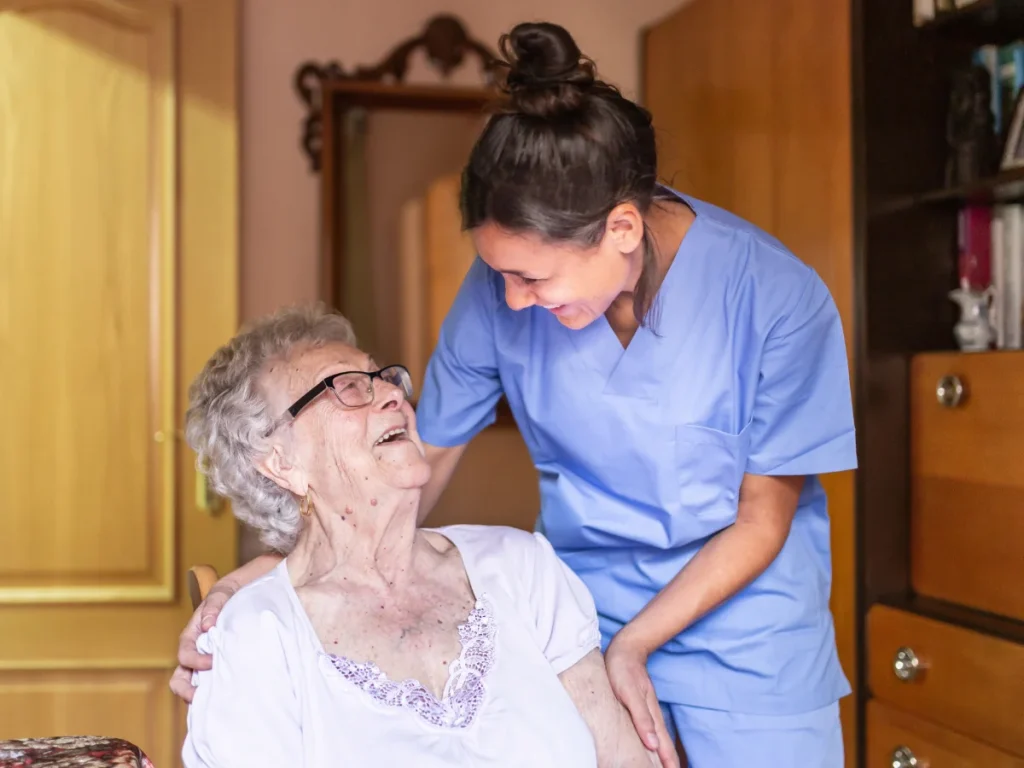
They provide personalised care for the person who needs help in their own home. Carers are there to help with everyday tasks like dressing, bathing, cooking, toileting. They are also there to provide emotional and social support, reducing loneliness. They can assist with mobility and access to the local community. This is especially useful if the person lives alone.
Live in care is best for those with mild to moderate medical needs. They may simply be getting older and more frail but want to stay in their own home for as long as possible. It is beneficial for those individuals who would like consistent one-on-one care, as the live-in carer becomes familiar and the routine can adapt to personal preferences.
Understanding nursing homes
Nursing homes provide a more formal arrangement to care for those who have serious health or mobility issues and need medical supervision.
Nursing homes have on-site medical professionals available 24/7. They often have multi-disciplinary teams that can provide treatment and care. They can also be specialists at dealing with particular illnesses and conditions. The more structured environment and higher staff levels provide round the clock support and monitoring.
Nursing homes are best for people who are unable to care for themselves at home or have severe mobility issues. They have scheduled activities and meal times, like a hospital. There are also other people in residence which is beneficial for social interaction.
Choosing between live in care and a nursing home
Consider the emotional & psychological impact
- Live in care can preserve a sense of independence and familiarity with surroundings and community.
- A nursing home means an adjustment to a new setting and the formality of an institution which may cause feelings of isolation.
Physical and medical needs
- Live in care is suitable for those who do not need intensive medical attention, although additional medical staff could be called in.
- Nursing homes are ideally placed for those with advanced medical needs, and those who need specialist nursing.
Cost of care
- Live in care can be more affordable, depending on the level of care needed. It is best for those with mild to moderate needs.
- A nursing home can be more expensive due to the residential facilities available, medical staff salaries and the need for bigger teams.
The level of care
- Live in care provides personalised, one-on-one support with everyday tasks. It is intended to support within the home.
- Nursing homes have more staff and facilities for specialist care but the more formal environment requires a certain level of observance of the routines.
Befriending and companionship
- Live in care provides opportunities for deeper connections with the carer and continuing relationships with family, friends and the wider community.
- A nursing home offers opportunities for interactions with other residents and staff. There may also be group activities on site.
Advantages and disadvantages of live in care vs a nursing home
The main advantage of live in care is the comfort of staying in a familiar environment. This helps maintain independence and the personalised care plan can enhance the quality of life. Live in carers can also ease the strain on a family caregiver who has been providing the care to date.
The main disadvantage of live in care is that carers are not medical professionals. But a team can be drafted in to supplement the domiciliary carer.
The main advantage to a nursing home is the access to professional medical care and a multidisciplinary team that may include nurses, doctors or therapists. This is ideal for those with advanced medical conditions.
The main disadvantage of a nursing home is the loss of independence, control and privacy that comes with a more formal setting. It may lead to feelings of isolation or disconnection from family and friends and community, although group activities within the nursing home will provide the possibility of socialising.
A nursing home may also be more expensive than live in care depending on the requirements.
How to decide between live in care and a nursing home
Think about your needs – does the person need round the clock medical attention or is daily assistance enough to meet their requirements?
Think about their feelings – does the person thrive in a group setting or would they prefer to stay in their own home environment?
Consider the costs – compare the costs of both options and think about benefits that could contribute to care.
See our article about funding care and especially note that you are not required to sell your home to fund home care, though you might be to fund a nursing home.
Family involvement – can the family provide some caregiving or do they want to be involved in the decision making about care provision?
Consult with professionals – before making any decisions about care providers, talk to your GP, healthcare team or social worker and seek advice.
Real life stories
Hollie’s family chose a nursing home for her grandmother who had Alzheimer’s as she had rapidly lost the ability to care for herself, feed herself or recognise any of her family members.
Sara’s family chose live in care for her mother because they wanted her to continue to live independently in her own home for as long as possible.
Every family situation is different and the right choice depends on the requirements.
Live in care vs a nursing home
The key difference between live in care and a nursing home is the level of support that is provided.
Live in care means that the user can stay in their own home, which is often their preference. They can maintain their independence and make choices about their routine for as long as it is possible to do so. Live in care provides help with daily tasks like personal care, housekeeping and mobility support. It supports relationships with family, friends and a familiar local community.
Whereas a nursing home can provide group activities and the opportunity to socialise with other residents. A nursing home has access to specialist medical staff and more resources. They can offer a more structured environment when it is no longer safe for a person to remain at home.
Are you making a decision about care for yourself or your family? Talk to our experienced care team and find out what support we can provide and the associated costs.