
A guide for South Asians living in London
You might wonder why there is a need for a service that provides companionship for the elderly. Older South Asians living in London have many opportunities on their doorsteps. But accessing those opportunities can be hard for someone who is having difficulty with mobility, sight, or hearing.
There is lots of information about loneliness in older adults. Their friends or partners pass away, they may become chronically ill or have a cognitive impairment. This might mean they are unaware of the opportunities around them to go out and socialise.
South Asians, in particular, reported feeling lonely more often than the general population in a study by ResearchGate with nearly a third feeling loneliness. This could be due to there being less options for them to socialise in their own language and culture or it could be due to the stigma associated with discussing the mental health issues that can stem from isolation.
The need for companionship
Everyone needs company. Having friends and a wider social circle provides us with many benefits. It helps us keep mentally active as we take part in conversations and activities. It provides us with a feeling of connection with our community and cultural groups like those at the temple, gurdwara or mosque. It keeps us well and it can improve our immunity. It keeps us moving, going outdoors and walking. It also provides us with emotional support when we are dealing with stress or hardship.
Traditionally South Asians would live in extended families and there would likely be someone who has the time to sit and talk, prepare a meal and share it, and help with daily activities. In modern London life, families are much smaller and the breadwinners are busy building careers. This means there is less time to talk, sit or help older family members.
Families might not live nearby any more, through emigration within the UK and overseas. There is often a generation gap which can lead to misunderstandings. Different generations have different values and expectations.
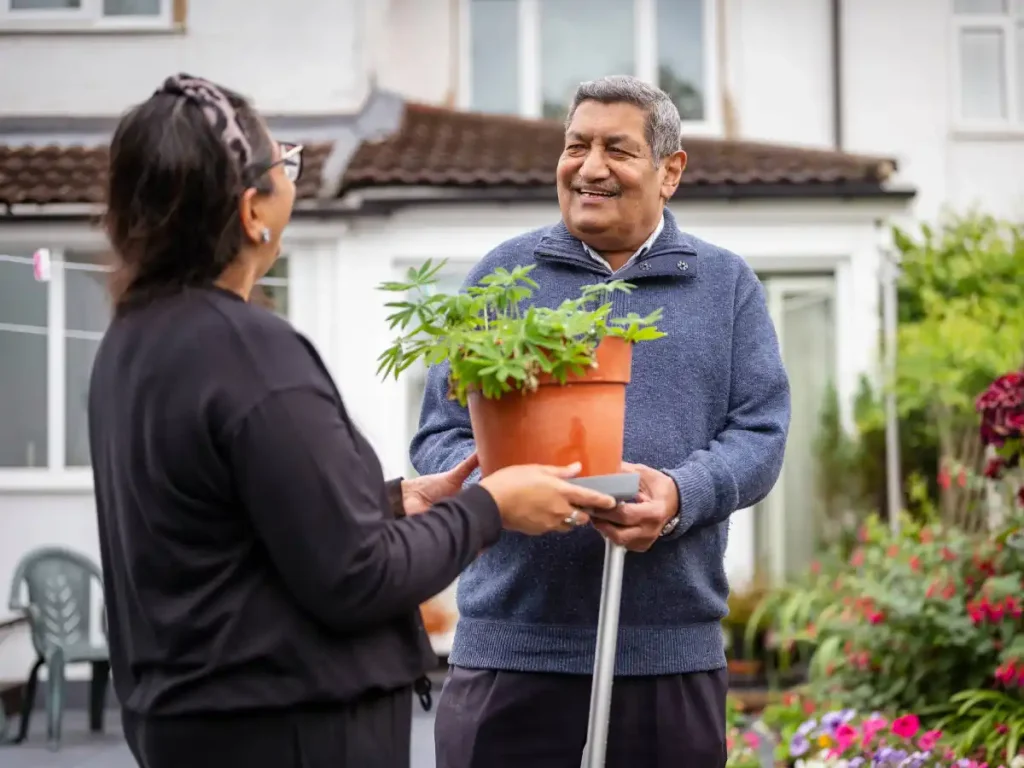
Finding someone to be a friend and companion when you are older and don’t get out of the house very much can be difficult. It helps to have someone who speaks the same language and understands the nuances of culture and religion. It also helps if they understand dietary requirements and any cultural expectations around food. That’s why we, at Jothno Care, aim to match our carers to the family.
What does a companion do?
Companion carers provide services to supplement the family and ensure that the elderly person is not spending too much time alone. They provide help with personal care: tasks like bathing, eating well, dressing, and going to the toilet. Alongside this, they keep company with the elders and talk to them.
Companions provide stimulation through games, activities and conversation. This keeps the older person’s mind active. Almost anyone can exercise in some way – for ideas, look at our blog on exercises for those with lower mobility.
“The holistic care approach of Jotho Care and Support has exceeded all our expectations. Their team’s dedication to not just meeting physical needs but also nurturing mental and emotional wellbeing is commendable. Our grandmother has thrived under their care, regaining a sense of independence and joy we hadn’t seen in years. Jothno’s commitment to comprehensive care has made all the difference. A heartfelt thank you to the entire team!” – Mark
Carers can also go with an older person to an external event, activity or regular weekly outing. For example, Jothno Care can arrange for transport to an event and the carers will attend to make sure that the elder is safe and enjoys the day out.
Companions supplement the family time and we keep communication open with the family to make sure that everyone is satisfied with how we handle care. Every client has a tailored care plan that meets their needs and is respectful of their preferences and traditions. And our carers are trained to meet the needs of older people with complex health conditions, like Alzheimer’s and dementia.
Carers can help the service user to find appropriate activities in the local area that they can attend. This overcomes any issues with limited English proficiency and where culturally appropriate services are sparse. They can look for language specific clubs and cultural events to attend. They can arrange for visits to community centers and religious organisations.
Companions can make sure that older people are able to access digital solutions, making video calls or using social media so that they can stay in contact with friends and family from further afield. Using the internet can also help with accessing online community groups. For example, we have helped an elderly lady to use an iPad to play games and keep in touch with her family.
We have supported many older South Asians across London including those with dementia. We can assist temporarily while a family member has respite, for a few hours a week or we can arrange a 24/7 live in care team.
We encourage elders to continue to participate in cultural and social activities as long as it is possible to do so. We can facilitate transportation to community events and we can be proactive about mental and physical wellbeing, while at the same time keeping the older person company.
Arranging companionship for the elderly
It is really easy to arrange our befriending and companionship service. Simply fill in our referral form and we will reach out or call our head office on 020 4548 9300. You don’t need a health care professional to refer you.
Our aim is to empower older South Asians in London who are living alone by helping them to build meaningful connections with friends, family and the wider community. This will reduce loneliness and keep them living safely in their own home for longer.
Our care teams will develop an individual care plan that will take into account the person’s preferences and take into account their family’s needs. We aim to match our carers to the user, so that they share language, culture and religious traditions. This makes the connection stronger and it can feel like an extended family.