
Jothno Care builds personalised, culturally sensitive support at home for your loved ones. A personal care plan is the written agreement that sets out the day-to-day support, goals and plan for how our carers will help keep your relatives safe, comfortable and independent at home.
Personal care plans are important for London families that are looking for support for their elderly relatives or family members with learning disabilities. They will be clear and will lay out how we work including our respect for culture, language and faith. This is especially true if your family has a specific requirement to follow cultural traditions, for example in South Asian communities.
What is a personal care plan?
Every person that we care for is an individual – something that can get forgotten when they can no longer communicate clearly what they want for their life at home. A personal care plan is a tailored road map that covers the needs, preferences, routines, and responsibilities of everyone that is involved in care. We work closely with London families to ensure that everyone gets a say in how the care will be provided. Personal care plans are also updated as family circumstances or needs change over time, e.g. as dementia progresses.
What’s included in a personal care plan?
Personal care plans cover personal details, identity, history and the support required by the person who needs care.
Personal details include the age, health conditions, communication needs, mobility concerns and the existing family support network.
Identity, culture and faith includes the languages spoken, religious practices, prayer times, festivals (e.g. Eid, Diwali, Vaisakhi, Christmas, Easter), gender preferences, and modesty requirements around personal care.
History includes what matters most to the person who is being supported, their life story and highlights, the roles in the family, any hobbies that they may enjoy, any community activities that they want to continue to take part in, and what helps them to feel respected and at ease in their home.
Daily personal care and routines
Daily personal care forms a large part of the support we provide to our service users. Daily care includes morning & evening routines, meals, and mobility.
Morning and evening routines include when they would like to wake up and go to sleep, how they prefer to wash (bath, shower, bucket wash, wipes), dressing and their favourite clothes, grooming (hair, shaving, nail care), continence and toileting support.
Meals can be prepared with ingredients and recipes that are familiar and culturally correct. Carers can support eating and drinking, cutting food up and feeding the person if necessary. We’ll encourage hydration, prompting regular drinks. We’ll keep an eye on any issues with swallowing or eating and comply with any special instructions, for example when medication needs to be taken before/after or between meals.
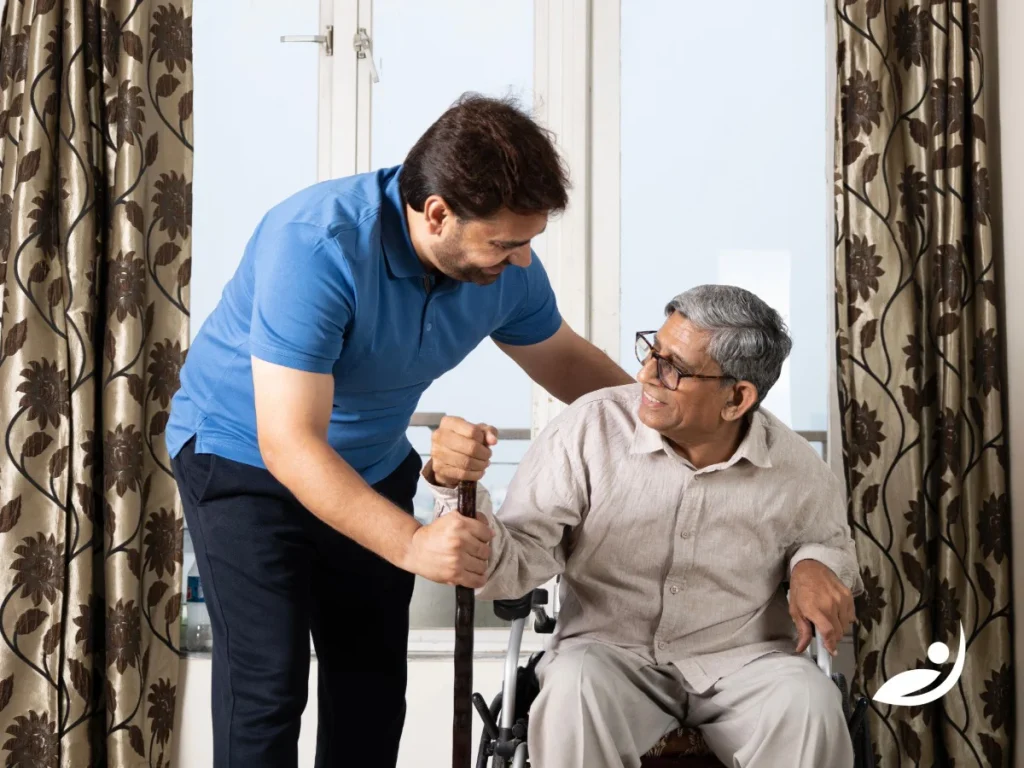
Mobility and transferring from one place to another can be difficult for those with limited mobility, so we provide support when walking, using frames or sticks, getting into or out of bed and sitting or standing up from chairs. We can advise on any equipment that needs to be used to improve safety. We can also accompany a person with sensory disabilities or mobility issues to events and activities outside the home and can arrange safe transportation.
Food, diet and cultural preferences
Food is an important aspect of personal care and we ensure that diet and cultural preferences are taken into account in our personal care plans.
Dietary requirements can include allergies or intolerances and personal preferences. We can prepare food that is vegetarian, diabetic-friendly, low-salt, lactose free or gluten free. Elders may experience swallowing difficulties or dysphagia and so a texture-modified diet may be required with soft foods that are easier to swallow.
Cultural food preferences may be as simple as familiar home-cooked dishes or favourite foods that are enjoyed. This can include whether they like spicy food, whether they are meat eaters, halal foods, etc. Carers can support with shopping, meal prep and storing food safely. They’re trained to honour cultural habits.
Religious practices include fasting, how care is adjusted during Ramadan, on fasting days or on special occasions when meals and medication might need to be adjusted to meet the needs of the person being cared for.
Medication management
Safety is a high priority for our personal care teams and medication management is a key service. We can monitor what medicines are taken, when they are due the next dose, set up reminders and handle administration, recording the medication too if necessary.
Our care teams are also trained to keep an eye on the elderly, watching out for changes in symptoms, looking at risk management – the risk of falls, wandering, using personal alarms, use of home appliances, infection control – all aimed at keeping the older person safe at home.
Emotional wellbeing & companionship
Older people who have limited mobility or mental health concerns can feel isolated as they are no longer able to get out of the house and attend events and activities they previously enjoyed. Part of a personal care plan is emotional support, companionship and maintaining a social life outside the home.
Emotional support includes taking notice of how your loved one likes to be spoken to, what calms them when they feel anxious or low and any known triggers like loud noise or being rushed. Personal care plans for autistic people and those on the spectrum will be particularly cognisant of any routines and habits that provide emotional regulation.
Companionship includes conversations, reading together or doing puzzles, accompanying the person on walks or to faith-based activities like festivals and feasts, and watching favourite TV shows and news in their preferred language.
Carers can help the elderly to stay connected with the local community, phone family who may live abroad, use technology like tablets or mobile phones to communicate or find activities, attend mosque, temple or church, and go to the community centre or day activities where appropriate. We can also arrange appropriate transport that can cope with wheelchairs and have limited mobility access as well as accompanying the person to keep them reassured.
How a personal care plan works
Initially we will arrange a call or visit to assess the needs of the person who requires care and their family.
The assessment will cover the physical, emotional, social and cultural aspects of care. We will involve the person who will be receiving care and the family decision-makers and if relevant, the health professionals or multidisciplinary team to agree the goals and daily tasks.
Then we will match the carer to the person and their family, considering skills, experience, language, gender and personality so that we know the carer is a good fit for the person and family culture.
We also regularly review personal care plans to ensure that they are working well and adjust them if the situation has changed since the last review. This is a living document that will change as the circumstances change.
We work with families across London from a diverse range of backgrounds, and as South Asians ourselves, we are specialists in providing culturally specific care to families. To arrange a personal care plan for your loved one, simply ring us on 020 4548 9300, email us, or fill in the referral form. You don’t need to wait for a GP referral.