
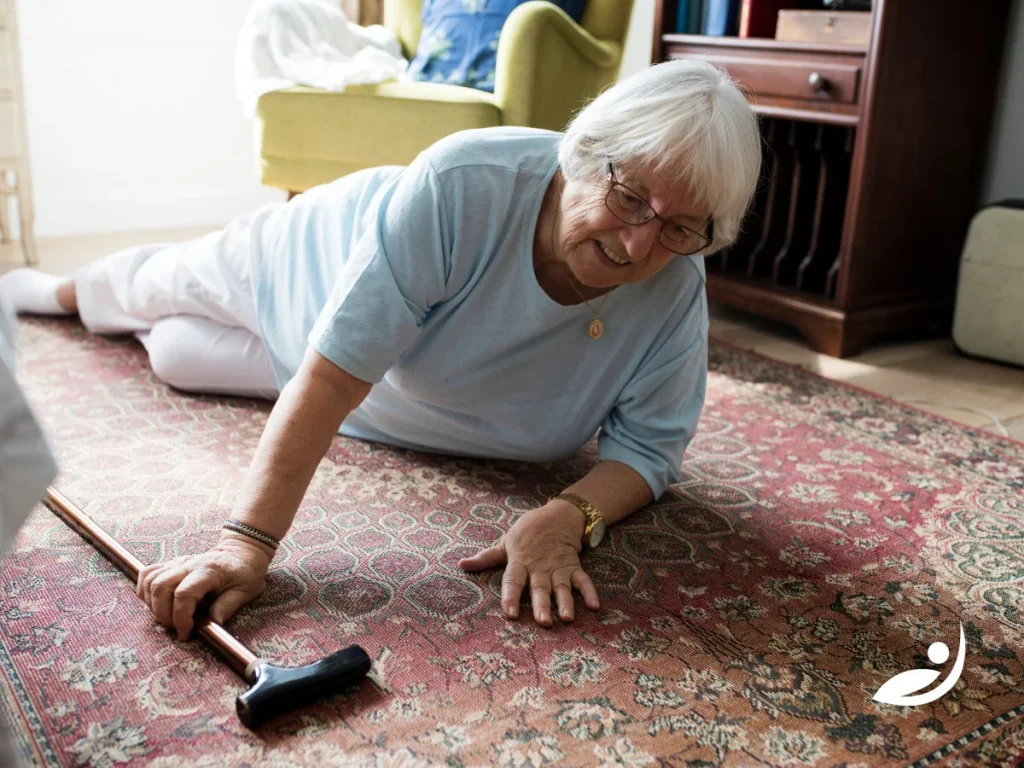
Slips and trips are more common in older adults due to reduced physical strength and failing eyesight. They are often caused by everyday items left lying around that are not noticed until it is too late. The good news is that a few simple changes to the home can ensure that they are less likely to happen.
Why do slips and trips happen more often as you get older?
The cause of slips and trips as you get older are mainly physical. Muscular weakness and muscle loss (sarcopenia) combined with poor eyesight and a slower reaction time can add up to risk.
If the elder has a medical condition like arthritis, diabetes, stroke or a cognitive disorder, the chance of falls increases. Some medications, including sedatives, anti-depressants and blood pressure medications can cause drowsiness or dizziness and affect co-ordination.
Elderly adults need support to maintain their independence and dignity as they get older and less able. This often falls to family members to provide, who may not have medical training on how to assist someone with a medical condition.
Why falls happen at home
The environment in the home can contribute to the possibility of falls. If the house is full of furniture or clutter, common in a multi-generational home with lots of people living in it, this can make it more difficult to move around. Crowded living spaces mean a higher potential for slips and trips.
Poor lighting can combine with weakening eyesight to stop an older adult seeing any trip hazards when they are walking around the house. Traditional floor coverings like rugs or prayer mats are slip hazards. In homes with stairs, the risk is higher.
The reduction in muscle mass after the age of 30 continues into old age. This can make it difficult for an older person to manage the stairs. If they have had a fall, they might be fearful of falling again and not want to try.
Simple steps for a safer home
Making small and affordable changes to your home can help all the family to live safely and happily – preventing accidents that can be serious.
Around a third of falls cause serious injury to the head, bruising or fractures, particularly hip fractures 95% of which are caused by a fall (National Institute for Health). Here are some easy to implement ideas to make your home safer:
Keep walkways tidy – Remove clutter and tape down wires. Think about removing loose rugs and putting prayer mats away when they are not in use. Reduce the amount of furniture in rooms.
Improve lighting – Add extra lighting to rooms that need it. Focus on rooms like corridors, bathrooms and bedrooms used by the elderly. Use brighter light bulbs. Motion sensor lights will come on only when someone is using the room and will turn off after a set period. Use coloured tape to mark the edges of stairs.
Install help aids – Install grab bars in the bathroom and toilet. Add them to every internal and external staircase and make sure they are easy to reach and have a stable grip. Put a non-slip mat into the bath too. There may be some reluctance to install help aids in the home, particularly if the whole family lives there. Discuss any concerns around this together as a family.
Use the right footwear – Ensure that slippers and shoes have a good grip with anti-slip soles. Don’t let the older person walk around the house with socks or stockings on. Remember that bare feet can also slip.
Consider convenience – Keep frequently used items within easy reach on a nearby table to prevent the need to stretch to reach them or reach up. Extending the body can unbalance someone whose balance is no longer strong.
Think about professional help if your elder is no longer coping and is at high risk of slips and trips. We can provide home care in your own home to assist the elderly with getting up, dressed, washed and moving around the house.
How taking care at home can prevent slips and trips
We can help when mobility is reduced and a wheelchair or walker is required. We will discuss the care plan with the whole family and can address any concerns around the provision of culturally appropriate care.
Slips and trips are more common as we age and weaken. They can cause serious injuries like bruises, head injuries or fractures. Most slips and trips are caused by everyday items like clutter, lighting, loose rugs or stairs.
Very simple and affordable changes to the home can prevent falls and potential injury. Family caregivers can put these into place quickly and easily to make sure that their elderly relative is safe to move around the house.
If the older person is no longer able to cope despite these changes, consider calling in a professional home care service like Jothno Care & Support that can ensure the safety of your loved one. A care plan can include short visits or full time round the clock care at home.